Ideas to get you going

This is For Starters #44

For Starters is the essential weekly briefing for the next generation of small business owners. Inspiration and ideas, every Friday – for free. It’s curated by Danny Giacopelli, formerly of Monocle and Courier magazines.

Hey, starter! Read on for…

  • Inspiration  Mangos & karate

  • Advice  A pivot from tech to tea

  • Ideas  Who runs for fun?

  • Resources  100,000+ images

  • Town Hall  Subscriber shoutouts

—Danny (say 👋 via email, LinkedIn or IG)

Get inspired

Señor Mango sisters

1. Mexican mangos. Sisters Daniela, Paola and Pamela Wong grew up surrounded by mangoes as far as the eye can see. Decades ago, their father built and ran a mango farm in Sinaloa, Mexico. He didn’t grow just any mangoes, he grew the Kent variety – the sweetest and juiciest. Fast forward 30+ years and the three ‘sisters, best friends and partners’ are carrying on their dad’s legacy by running a small biz called Señor Mango, selling delicious, dried Kent mango slices in various flavors. 🥭 

You can pick them up at the likes of luxury US grocery shop Erewhon. The secret to getting stocked, Dani tells For Starters: “Persistence, quality, uniqueness and enjoying the road!”

“Mango has a very powerful meaning for us,” Dani says. “It’s more than a fruit; it’s family, love, hard work and culture.”

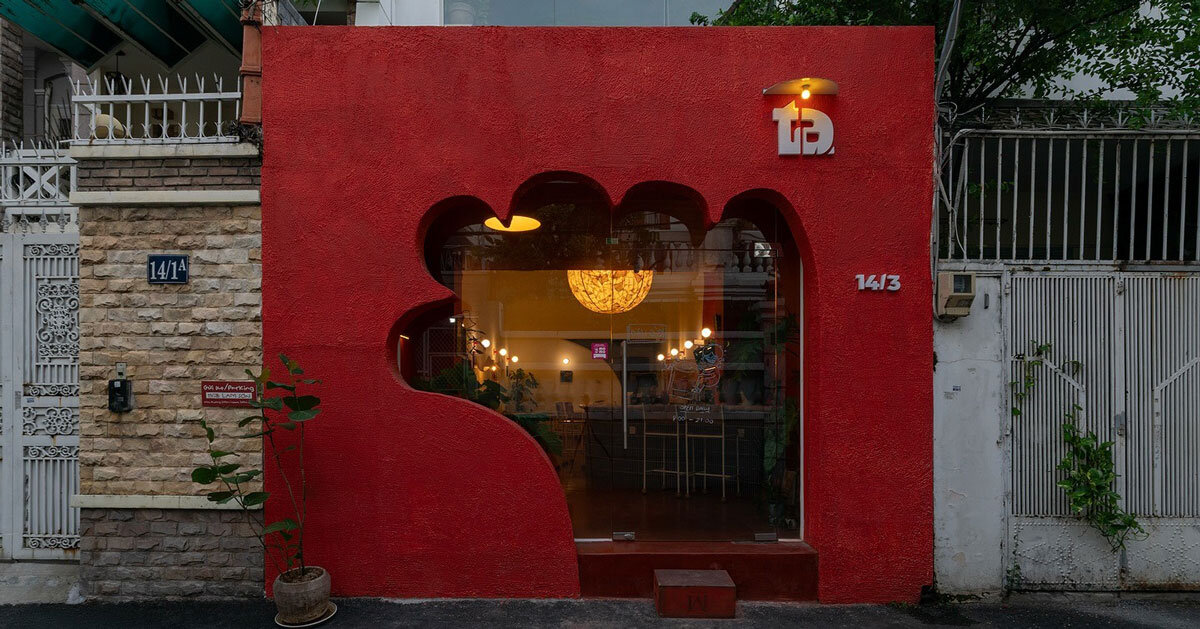
2. You gotta hand it to them... This adorable cafe recently popped up on a quiet residential street in Ho Chi Minh City. The designers understood the assignment: just make people smile. ☕️

3. A case study of resilience. The Pacific Palisades fire destroyed ~2,635 local businesses. This is the story of how one is trying to rebuild. If you read anything this weekend, read this. 🥋 

4. The bicycle chef. And in Copenhagen, meet Morten Kryger Wulff, who gives bicycle tours around the city before cooking delicious gastronomic meals for his guests using ingredients, pots, pans – and even a fridge and stove – all found on his mobile kitchen (i.e. his bike). 🚲️🧑‍🍳 

Starter wisdom

Brooklyn starter Arjun Narayen once worked on tech products used by billions. Today he’s obsessing over tea leaves, margins, and the hundreds of tiny details that make a small biz tick.

After stints at Facebook and Spotify, Arjun got the entrepreneurial itch. But he didn’t want an MBA – business school wasn’t for him. He wanted the real thing. So he gave himself a two-year window to build something from zero. If he succeeds, amazing. If he fails, he’ll go find another 9-to-5.

The result? Raazi Tea.

→ With his business growing and that 2-year deadline approaching, Arjun shares what the experiment has taught him…

My first job out of school was at Facebook. I was a product specialist and worked alongside super talented folks. The culture was to move fast – and I learned a lot. There are some things you take from your first job that you have your whole career, you know? Then, around 2020, I accepted an offer from Spotify. I was eager to build product and move into a role with more agency. I worked there for four years in the personalization space, the group that makes algorithmic playlists. The job felt like a sandbox. We built things we thought were good ideas, even if there wasn’t necessarily a whole lot of data to support it – products like Spotify Mixes, Blend and Jam. That’s not often done in tech.

Soon enough, I felt an itch to start something of my own. When you work in consumer tech, you’re building towards engagement. That was fun when you work at a place like Spotify, because I love music and I love the product. But you’re not necessarily learning how the business runs. You’re never seeing a P&L. In my six years working in consumer tech, the word profit was said in maybe one meeting. Yet that’s what a business is: sales. It’s creating a product in a way that supports the business.

I wanted to learn about business, but I didn’t want to go to business school. So I told myself, why not take two years and try to actually start a business? In two years you can do a check-in and if it’s going well, keep going. If not, try and get another job. That’s where I’m at right now. I quit at the end of 2023, so I’m coming up on two years!

After I quit my job, I thought: what do I want to build? I wanted it to be something I loved. Something I knew more about than the average person. And something that could bring elements into my life that were missing in tech, where there’s a computer screen between you and customers. Things like photography, meeting people, telling stories.

So I started thinking about tea. As someone with parents who grew up in India, chai was a family ritual. We’ve had it every morning for as long as I can remember. I can still hear my mom’s mortar and pestle in the morning, crushing cardamom. Tea connects people across the world, across cultures. If you’re Japanese or Indian or British, you might have this same beverage in very different ways. It might appear in different parts of your life. Tea’s been around for thousands of years. There are very few things that have been around that long. I find that incredibly interesting.

Collect ‘em all

With chai, there are lots of angles you can take. This is where the business and product side of my brain started working. You can break up the category into hot and cold, and into a few formats:

  • You can create a dried blend that you make at home. But chai is time consuming – you have to cook it, add milk, then cook it again. Especially in America, not many people want to do that.

  • You can have a brick-and mortar-store. But I just didn’t want to open one – you have to raise capital in a very specific way.

  • Or you can have a cold ready-to-drink product that sells in stores and online. But then you’re shipping a heavy bottle around the country or the world, at low margins. So I quickly abandoned masala chai as a starting point and looked to other kinds of tea…

The one interesting path I discovered within tea is food service. Bagged tea is an fascinating category because it’s a shelf-stable, lightweight product that has a bunch of potential sales channels. There’s a retail angle and a DTC channel, because I can easily ship it around the country. There are overwrapped teas you see in every single hotel, airline, and high-end, premium establishment. Aligning myself with those spaces is an enticing marketing angle. The theoretical ‘as seen in’ section of the brand could really pop. So I thought the space had legs. I believed there’s a gap for a brand that could get people excited, particularly with the storytelling side of things. So I launched Raazi.

My first year was focused on brand, packaging and supply chain. I went to the World Tea Expo and tried tea from dozens of farms and suppliers. I tried to figure out my SKUs. How many do I want to manage? Who am I going to sell to? Setting up the website – all that stuff. I opened for pre-orders at the end of November 2024 and started shipping in January. We’ve been live for about 11 months. 

We’re now stocked in 100+ stores! That’s a really cool milestone. Retail has gone well – and by retail I mean shipping cases of SKUs into stores that they can sell. These are mostly what we call “shoppy shops” in the industry: cute stores that might be more willing to stock indie, specialty brands. 60 or 70 of those shops have happened in the past four months.

For the first six months I was quite literally putting labels on the boxes myself. Every time I got a new store, I was stressed. I had to go to the warehouse, bag things, close them up, take a machine and put labels on. I started the year with 2,500 boxes of tea. Those took me about six months to sell. And I recently placed an order for 25,000 boxes. Those will take me longer to sell, just to be clear! 

Retail has gone better than expected. But my hypothesis is that what’s making retail go well is the same thing that’s making DTC go slower than expected. If a shopkeeper sees a premium tea brand that might look nice on their shelf, they’ll buy it. Yet you as a consumer might come across our website and like the brand, but it’s a harder sell to wait for it to ship when you can get tea the next time you’re at the shop. That’s been a learning. I have some ideas how to build up these sales channels a little bit more efficiently next year.

A Brooklyn brand

Thinking super early about sales channels has paid off. I email pretty much every person who buys Raazi from the site whose name I don’t know. I’ll ask, How did you hear about us? They’ll say: I found you in this cafe, so that’s our food service channel. Or, I found you on the shelf of this shop, so that’s retail. Or, I saw that you did a brand activation with Vuori or FaceGym and then I bought it online, so that’s the DTC side of things.

In your first year, you kind of roll with what’s working. There’s a Substack I wrote about how I named one of my SKUs “Indian Breakfast”, because, well, I’m the son of Indian immigrants and English Breakfast tea has always been Indian tea! That worked pretty well for DTC. But when I started going bigger in retail, I’d visit these stores in NYC and I’d be like, “Hm, all the teas are selling really fast except for this one.” I asked a bunch of questions and realized, I think, that most people assumed it was a chai. So I changed the name and design.

The biggest differences between consumer tech and tea is scalability. Part of launching a software product within a big company is free distribution. You’ve got hundreds of millions of people using it on day one. That’s cool and exciting, but in hindsight, a lot of that is external validation: people know what I worked on. When you work on a physical good at a premium price point, you have to accept that a billion people are never going to use it. But I realized that doing something as well as I could for 5,000 people could bring me more joy than building something that a billion people see as a utility.

Don’t get me wrong, there are products that a billion people get a lot of joy from too. There’s nothing wrong with software and I truly enjoyed my jobs and feel grateful to have worked at those companies. But there’s just something about someone physically interacting with your product. I was at a cafe that sells Raazi a couple days ago, and sometimes there’s a long line. Our teas are stocked right in the line, so a lot of people will pick it up and spin it. I’ll go up to them and ask them what they think. The human connection that a physical product brings, particularly in food and beverage, has been incredibly fulfilling.

Starting a business is a deeply personal thing. I’m really glad I spent time thinking about how starting a business might positively affect my life and the things that I enjoy. Something as simple as feeling a part of my community – that’s probably my greatest joy from starting Raazi so far.

 Good idea!

1. Hobby apps  The new social media?

2. Runcations I travel to eat myself silly. Others travel to sweat and work out. We are not the same.

 Toolbox

🛠️ Resources

Just dropped: The State of Fashion 2026, the 10th annual report by McKinsey & BoF. Lots of data and trends.

Public Work by Cosmos: 100,000+ images from the public domain

📚️ Reads

The 50 Best Clothing Stores in America. NYT

The Last Pearl Diver in Qatar. Observer (thanks Dana Elemara for the spot!)

29-year-old spent $20,000 to open a store in New York—now it brings in $1.6 million a year. Make It

52 things I learned in 2025. Tom Whitwell

Why this three-legged stool is still everywhere. The Edit

This Fashion Startup Wants Your Taste to Make You Money. The Chow

The Argument for Letting AI Burn It All Down. Wired

An interview with Sally McKenney, Google’s favorite recipe developer. Embedded

The Millennials Who Ditched Cities During the Pandemic Would Like a Word. Dwell

🧠 Findings 

9% → The percentage drop in the volume of wine sold in major markets between 2014 and 2024. We have already reached ‘peak wine’.

🙃 Fun

New book: Artifacts: A Visual History of Technology from 1965 to the Present

 Town Hall

And in Madrid, For Starters subscriber Elinor Noble is growing a new kidswear brand with her friend Mariana, called TwoThirtyTwo.

The name is an ode to ‘the precise (and arbitrary) time’ that the two childhood friends, who reconnected as adults, ended their school day: 2:32pm. “It reminds us of a time of curiosity, freedom, and possibility,” they say.

Elinor, who was formerly global head of 360 merchandising at Spanish luxury house Loewe, says:

“In terms of expertise that we’re missing: talking to people who have scaled a bootstrapped physical product business from 0 to 100,000 is interesting to us. We are in the thick of it all and feel pretty good, yet also completely like ‘WTF, how does this work??!” sometimes. Speaking to people with the experience would be mega helpful.”

See you next Friday 😎

🙏 “For Starters is a great way of showing how others build businesses in creative ways that work for them. It’s one of the few newsletters I actually read, so keep them coming!”Lindsay Faller, subscriber
📬️ Not a subscriber?Join for free
👋 Follow us: @itsforstarters & LinkedIn
🗣️ Take our subscriber survey
📬️ Tell us your business dreams[email protected]