- For Starters
- Posts
- It started as a joke
It started as a joke
This is For Starters #45
For Starters is the essential weekly briefing for the next generation of small business owners. Inspiration and ideas, every Friday – for free. It’s curated by Danny Giacopelli, formerly of Monocle and Courier magazines.
Hey, starter! Read on for…
Inspiration ➠ DIY eureka moment
Advice ➠ Joking with Comedy UO
Ideas ➠ The doorman fallacy
Resources ➠ Public Domain Day!
Town Hall ➠ Subscriber shoutouts
➠ Get inspired

Starter solution | Credit
1. Eureka! When artist and designer Ariela Kanarek Zrihen got sick of paintbrushes and supplies cramping her increasingly disappearing table space, she had a brilliant and simple solution. Spotting a piece of scrap wood, she drilled a few holes in it and clamped it to the edge of her table. Case closed. But when any pain-point is solved elegantly, people take notice: in this case, Ariela’s artist friends soon asked for their own. Thus was born a full-blown business: AKZ.tools. That original wooden paintbrush holder is now aluminum, comes in two sizes, and keeps your brushes, supplies – and your creative mess more generally – in check. 🎨
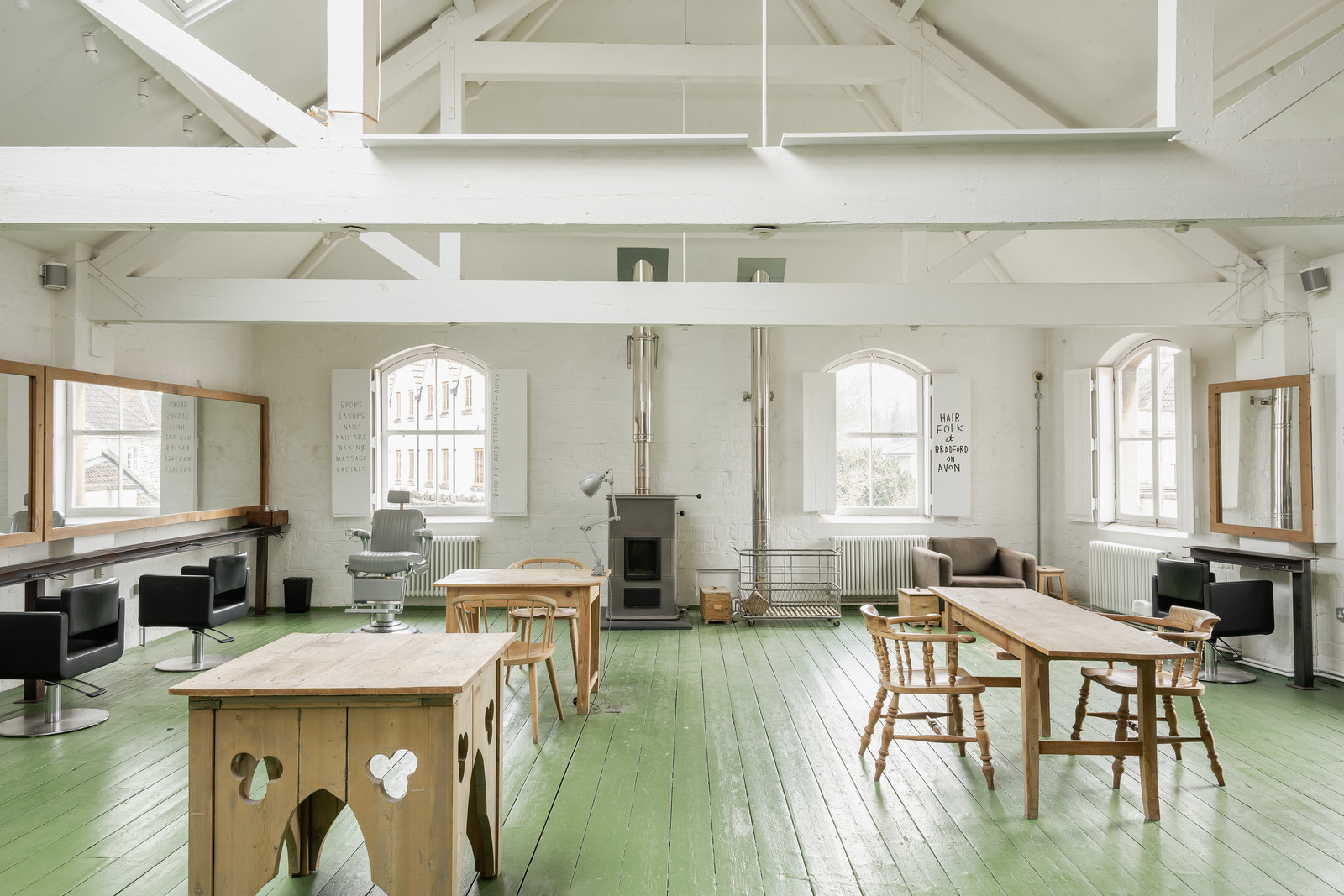
2. Brick and mortar. Meanwhile, this 4,100 sq ft space in a 19th century building in Bradford-on-Avon, Wiltshire (🇬🇧) is just aching to get messy…
3. Reinne’s Place. This story is equal parts heartbreaking and incredibly inspiring… ☕️
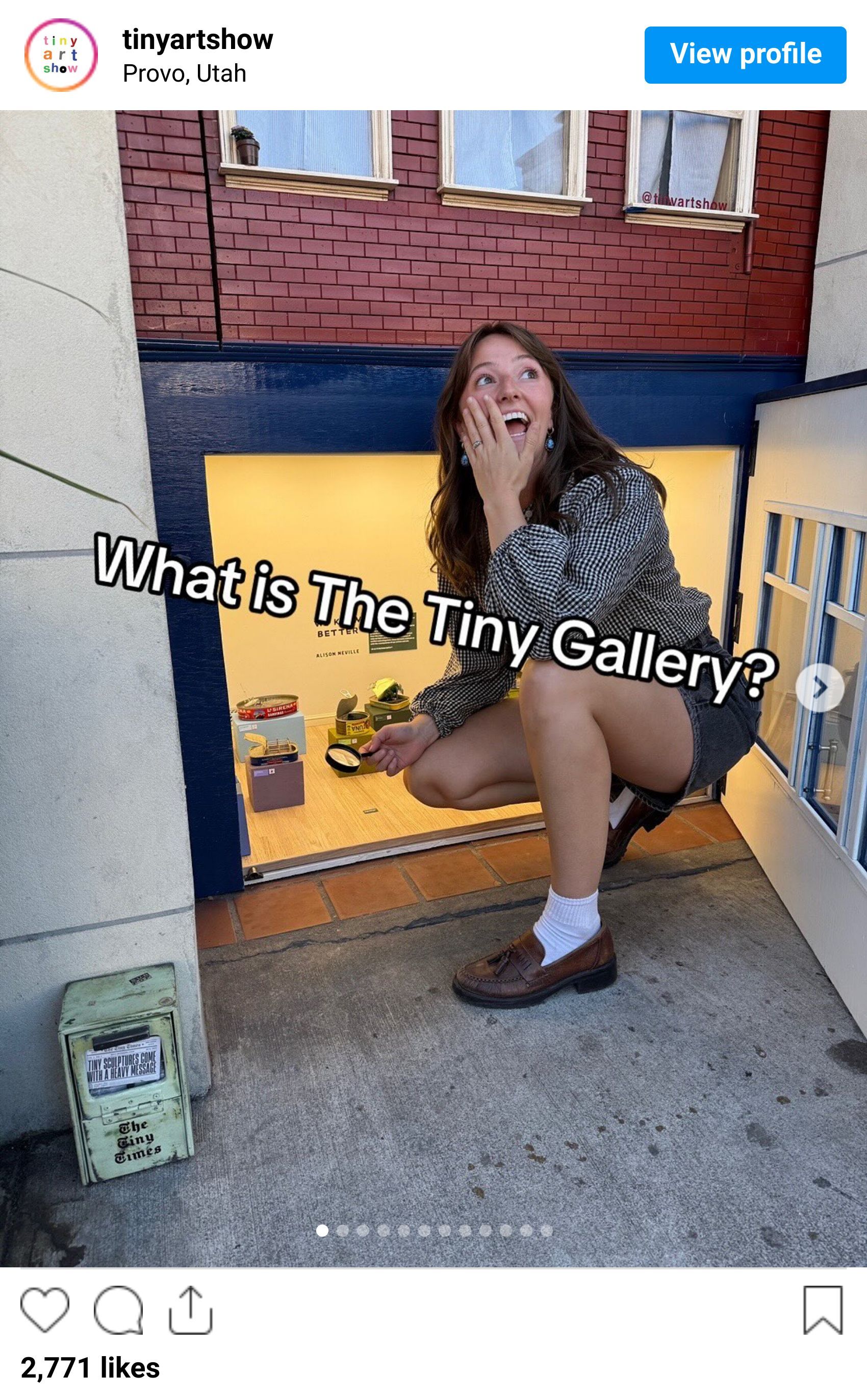
4. Start small. And it’s been decided: every city needs a tiny gallery… 🖼️
—
➠ Starter wisdom
“We started by accident,” says Ethan Mansoor, half of the duo behind New York’s cult-famous Underground Overground Comedy.
In 2021, straight out of college, Ethan and his friend David Levine had the idea to throw comedy nights inside some of NYC’s most well-known small businesses. We’re not talking venues. We’re talking laundromats, candy stores, barbershops and, yes, famous delis – they soon became known for their mega sold-out gigs at the iconic Katz’s Deli. (And that’s when the New Yorker came knocking).
This month, they’re gearing up to launch their first-ever “Big Small Business Tour” – five straight nights, from Jan 12-16, at food institutions Barney Greengrass, Zabar’s, Veselka, Economy Candy and Russ & Daughters. Tix go on sale on Dec 22.
→ Ahead of the tour, For Starters caught up with Ethan to find out the Comedy UO business playbook – or if they’re just winging it night after night…

Ethan, David and friends
Hey Ethan! How did Comedy UO start?
David and I have been friends since we were five. We actually went to the same elementary school. We also both love comedy. David performed a bit in college, while I watched a lot of specials and wrote jokes on my Notes app. During the pandemic, clubs were closed for a full year, but we went to some random shows, including one with Netflix-level comedians performing in a hotel lobby. Afterwards I asked them where they found these venues and they mentioned they were doing some private events.
So I said to David, “How crazy would it be if we got Sam Morril to perform for our friends?” We reached out and didn’t hear back, but David’s got a lot of hustle, so he told Sam Morril’s agent that we’d already booked Mark Normand, and he told Mark Normand’s agent we’d already booked Sam Morril. And somehow we got em both! Since then we’ve had the credibility to book big names.
A proverbial fake it till you make it moment.
It wasn’t until our 20th show that we were, like, I guess this is a business. We were just having so much fun. Now we get as excited finding a crazy venue that’s been on our radar as we do booking a new comic we love. People just resonate with that. The biggest one we do is the Katz’s Deli show. This is an institution that people have grown up going to. People just want to be there, lights off, just the neons. It’s awesome. Our joke is anybody can sell out a show at Katz’s…
There’s a gigantic queue down the street just for the pastrami, let alone for comedy.
Right. There’s an exclusivity factor that grabs people. But we don’t try to be exclusive. The show sells out in seconds, because thousands of people want to go and it’s a room that can only hold 275. So it’s not us trying to be that way. Could we do more? For sure. But it’s more we love it being that special one-time thing. It’s not really a moneymaker for us. It’s break even at best.

Why’s that? Because it costs $$$ to book out the place?
It costs a lot to shut them down. Since we’ve started doing the shows, they’ve been doing a lot more private event stuff and found the value in that. I think a lot of places in New York in general have seen that if you’re a retail space from 9-5, there could be a way to activate the space the rest of the time.
For restaurants especially, we’ve noticed they all have private spaces and do a lot of corporate-y stuff in there, which makes total sense. It’s another arm to their business. We do a lot of private events now where other people sell the tickets and we’re just producing the show around it. It might not have the same crazy fun energy that we’ll have at our own ‘tent pole events’ like Katz’s, the Paragon Comedy Festival or Economy Candy, but at the end of the day, we just want to run shows – and selling tickets can be hard. So if someone's like, I’ll give you a full room, that’s great for us.
Do you guys have a playbook by now or are you making it up as you go along?
I wish we had a playbook! We don't know what the hell we’re doing. In April, it’ll be our fifth year doing it, which is crazy – but what worked when we were starting out has changed and doesn't work as well.
There’s also not a playbook because, remember, these aren’t venues. The last one we did at Paragon Sports, the oldest sporting goods store in New York. It started in 1908. The building is ancient. To turn off a light, you have to use the breakers on a different floor, which also kills power to the outlets. So, as much as I would love to say, do this, do that, and hand it off to someone, you can’t. But that’s accelerated our ability to be good producers. Like, we’re going into bagel shops!
Do you collaborate with the small businesses you set up in?
Yeah, they’re as much a part of the story as we are. Whenever we’re in a cool space, we try to incorporate what they’re known for. So at Katz’s it’s the pastrami sandwiches, at Economy Candy everybody gets free bags of candy and a little golden ticket.
Sometimes we’re at a show where it’s 45 people and sometimes it’s 300 people. So even the feel of the show is different and people love that. You might’ve been to 10 of our shows, but some are more intimate, some are big parties, some have afterparties. We want to deliver a different experience every time. Trying to establish a playbook is almost the wrong way to think about it. Because it can get stale.
What’s the weirdest operational thing you’ve run into? Noise complaints, bathroom issues, insurance stuff?
Insurance, we’ve realized, alright, you gotta get insurance… sometimes! Not every time! But there are weird little things. We’re always moving a pool table or a vending machine. Sometimes it can be dealing with a tough venue owner who comes around in the end. We try to be good about noise complaints. We’ve definitely gotten our fair share. Sometimes you’re on a very residential block. Three years ago we got a DM from someone who sent us the listing for a townhouse and asked if we wanted to do shows there. We thought it was a realtor gone rogue. But we show up and it’s these really nice guys who live and work out of it. They had a tech company, a yoga app, and we started doing shows in their townhouse. We had afterparties in their backyard.

Are you thinking about the next five years? Or just the next show? What’s your horizon?
On a show-to-show basis, we book ideas three to four months out. Our bigger events, like the Paragon Comedy Festival, take months of planning. We’ve also been thinking about magic recently. We’ve had super talented young magicians at our afterparties and they're blowing people’s minds. We took some of them out to dinner recently and brainstormed show ideas. We did one in October, and we’ve got another in December. A big thing for us in 2026 is Underground Overground Magic.
So it doesn’t always have to be comedy.
We’re still going to do comedy, but I see ourselves branching into other mediums if it excites us. We loved standup and naturally had a grasp for it. With magic, we’re very excited by it, but we’re super naive. I have no idea how they do this shit. So if I’m impressed, you’re going to be impressed. As long as we’re chasing things that excite us, we know we’re in a good spot.
What about expanding behind NYC?
Maybe! There are still so many places we haven’t hit in New York. One big one we hope is on the horizon is the Empire State Building.
And expanding the team, too?
As accidental business owners, David and I are trying to fly the plane while building it. We’ve never missed a show, but how can we be at the shows while also staying focused on these bigger dreams? You get distracted if there’s a big week of shows, and some things go on the back-burner. You lose steam. But if we could have someone on the team who’s always brainstorming ideas and sponsors, that would make our lives very easy. We’re slowly becoming a real company!
Sounds awesome. Best of luck, Ethan.
Thanks! The best way to understand what we’re doing is to be there in person. That’s the only way to replicate the Where the hell am I? reaction. And then people say, Oh, there’s some intention behind it and it’s actually a good show!
—
➠ Good idea!
1. Tomato wars → The annual corporate ritual of organic produce wholesaler, Organically Grown Company, in which team members throw overripe tomatoes at each other. (It’s more fun than it sounds). For all you starters getting a biz off the ground, what’ll be your company ritual that brings your people together? 🍅
2. The doorman fallacy → “It’s easy to see the visible things, but the invisible things make the difference.” 🫥
3. Acting small → Haris Fazlani, cofounder of creative studio Wørks, writes this in The Sociology of Business…
“The purpose of a creative agency is to help their clients ‘act small.’ I think this framework can be applied to any type of consulting. It’s a simple but potent idea. Acting small doesn’t mean necessarily being small. Large organizations can act small, but it gets harder as one grows. It seems more relevant than ever in the face of automation and artificial intelligence.”
—
➠ Toolbox
🛠️ Resources
Every year, hundreds of beloved film characters, books, cultural icons and works of art enter the public domain, meaning you can remix and repurpose them to your heart’s content. In the era of AI, this might not mean as much as it once did, but this is a legal path, not a dodgy one. Here’s what’s coming your way on Jan 1st.
📚️ Reads
How To Fix a Typewriter And Your Life. NYT
Gen Z doesn't care about your brand heritage. Creative Bloq
To grow, we must forget… but now AI remembers everything. Doc
Hot Girls Can Sell Pickles Snaxshot
A History of Yachimun, Okinawa’s Traditional Pottery. Urchin’s Home
How Pen Caps Work. Overthinking Everything
What’s going on at Beijing’s “fake offices”? The Dial
🧠 Findings
39% → The number of 11-to 14-year-olds who say brands “made for them” feel too young. Basically, 12 year-olds don’t want brands made for kids. They want to be treated like adults.
95% → Nearly all hemp-derived products made in America are at risk of being eliminated due to new federal government rules. It’s being called “a death sentence” to the US hemp industry. The latest, here.
🙃 Fun
—
➠ Town Hall
“I didn’t intend to start a cookie business,” says American-born, Amsterdam-based For Starters subscriber Aura Lunde. 🍪
But when a friend asked for her go-to chocolate chip cookie recipe back in February, and Aura joked to her husband that it could be a business, “he told me he thought it was a good idea, not a joke.” Today, Aura is the founder of, you guessed it, Aura Cookies.
At the heart of the biz are American-style, soft and chewy cookies – the type she, her mom and her grandmother made for years. Aura and her husband sell them to a growing group of regulars at a local neighborhood cooperative market.
So what’s next? Here’s what she tells us:
“I’m still making everything at home,” she says. “My biggest challenges are carving out time to make cookie dough and handling the Netherlands’ weather curveballs on market days. I have 2 small kids, one of whom is not yet in school full time. We hope to grow enough to be able to justify a small commercial kitchen in 2026 and start doing orders from an online shop.”
—